Your Guide to Residential Pest Control Services in Warren County
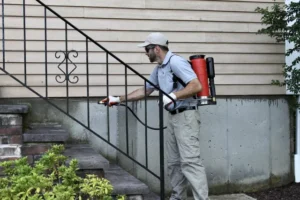
If you own a home in Warren County, pest control tends to move from a seasonal annoyance to a practical part of home maintenance pretty quickly. One week it is a trail of ants at the kitchen sink. A few months later it is wasps building under the eaves, mice finding a way into the basement when temperatures drop, or termites quietly working behind a wall where no one looks until damage appears.
Most homeowners do not need a dramatic infestation to start paying attention. They need clear advice, a realistic sense of what professional service includes, and enough understanding to tell the difference between a routine issue and a problem that can get expensive fast. That is where good residential service earns its value. Effective pest work is not just spraying around the foundation and leaving a bill on the counter. It is inspection, identification, prevention, and follow-through.
When people search for Pest Control Services Warren County, they are often trying to solve one of two problems. Either something visible is already happening, or they want to prevent a repeat of a problem they have dealt with before. Both situations are common, and both benefit from a methodical approach.
What residential pest control actually covers
Homeowners sometimes assume pest control means one standard treatment for everything. In practice, residential service is a collection of different strategies tailored to the pest, the house, the season, and the level of activity.
A company may be called out for ants in a pantry, yellowjackets around a deck, cockroaches in a multifamily rental, spiders in a finished basement, rodents in an attic, or a suspected termite swarm after a warm spring rain. Those are all pest issues, but they are not handled the same way. A technician treating carpenter ants should be thinking about moisture conditions and wood contact. A technician dealing with mice should be looking for entry gaps as small as a dime, food access, and nesting areas. A termite specialist has a different job again, because termite control often involves deeper inspection and long-term protection rather than a quick visible result.
This matters because good service begins with diagnosis. If a company quotes a flat answer before asking what you are seeing, where you are seeing it, how long it has been happening, and what conditions exist around the home, that is a sign to slow down.
The pests Warren County homeowners most often deal with
Residential pest pressure in Warren County usually follows predictable patterns, even if the exact timing shifts with weather. Wet springs can drive ant activity. Hot stretches bring stinging insects into full gear. Cooler fall nights tend to push rodents indoors. Mild winters sometimes let populations carry over more heavily into the next season.
Ants are probably the most underestimated pest in residential work. Homeowners often knock down visible trails with store-bought products, only to see the problem return because the nest was never addressed. The species matters. Odorous house ants, pavement ants, and carpenter ants each call for a different level of concern. Carpenter ants deserve special attention because they can exploit damp or damaged wood and create structural issues over time.
Rodents are another major category, especially in older homes or properties with garages, crawl spaces, sheds, or tree lines close to the structure. Mice can enter through tiny openings around utility penetrations, garage door corners, foundation cracks, and worn weather stripping. People are often surprised by how little evidence there is at first. A few droppings behind storage bins, scratching at night, or pet food disturbed in the laundry room may be the only clues.
Termites are less forgiving because they can remain hidden for long periods. Homeowners sometimes first notice discarded wings on a windowsill, soft blistering wood, or mud tubes along a foundation wall. By then, the colony has not just arrived. It has been active.
Then there are the pests people notice immediately because they force the issue. Wasps around entry doors, hornets in shrubs, yellowjackets nesting in the ground near a play area, and mosquitoes making the yard unusable are all common reasons for service calls. These may not carry the same structural risk as termites or rodents, but they affect how safely and comfortably a family can use the property.
Cockroaches, bed bugs, fleas, and pantry pests also come up in residential settings, though they often require more targeted, situation-specific treatment. Roaches in particular call for candor from both the homeowner and the provider. Deep infestations are rarely solved in one visit, and anyone who says otherwise is usually overselling.
Why local experience matters more than a low quote
Price matters. Everyone understands that. But residential pest control is one of those services where the cheapest option often becomes the most expensive if the problem is misidentified or only partially treated.
A company familiar with Warren County housing stock, lot layouts, and seasonal pest cycles usually works faster because it knows where to look. Older homes may have stone foundations, aging crawl spaces, or additions that create hidden entry points. Newer developments can still attract pest pressure if grading, mulch depth, drainage, or nearby wooded areas create favorable conditions. A local technician who has seen the same pattern across dozens of nearby homes brings a level of practical judgment that is hard to fake.
That judgment shows up in small but important ways. For example, when homeowners report “termites,” the issue sometimes turns out to be flying ants. To an untrained eye, both may appear after rain and look alarming around windows. Misdiagnosis can lead to unnecessary cost on one side, or dangerous delay on the other. Experienced inspection work narrows those mistakes.
What a proper home inspection should look like
The inspection is often the most valuable part of residential pest control, yet it gets treated as a formality far too often. A thorough inspection should tell you not just what pest is present, but why it is present and what conditions are helping it thrive.
Inside the home, a technician should be paying attention to kitchens, utility rooms, basements, attics, crawl spaces, garages, and any area where moisture, clutter, or food access is likely. Outside, the inspection should extend to the foundation, entry points, downspouts, mulch beds, wood piles, fence lines, rooflines, soffits, and vegetation touching the structure.
You want more than a generic statement like “activity noted.” You want specifics. Was there fresh rodent evidence or older evidence? Were ants trailing from an exterior wall void or just foraging at a sink? Is the wasp issue a single early nest or repeated pressure from sheltered roof edges? If termite risk exists, was there visible damage, conducive conditions, or active signs?
A good technician will usually explain findings in plain language. They will also be honest about what can be solved quickly and what requires monitoring, repairs, or repeat visits. That honesty is often the difference between a service relationship that works and one that drags on without progress.
One-time treatment versus ongoing service
Not every pest problem requires a year-round plan, but many homes benefit from some form of recurring service. The right choice depends on the pest pressure, the property layout, and the homeowner’s tolerance for risk and inconvenience.
A one-time service can make sense for a small, isolated issue. A single paper wasp nest under the porch roof, for instance, may only need direct treatment and removal. The same is true for a minor early ant issue if the source is obvious and environmental conditions can be corrected.
Ongoing service tends to make more sense when the home has repeated seasonal issues or when the stakes are higher. Families who have dealt with recurring ant invasions every spring, mice each fall, and stinging insects every summer usually get better value from a structured maintenance plan than from repeated emergency calls. Preventive service also gives the technician a baseline. They know the property history, which areas have been trouble spots, and whether the current activity is new or part of a pattern.
The real advantage of ongoing service is not constant chemical use, as some homeowners fear. Done well, it is actually more measured than that. A good plan combines monitoring, targeted application, sanitation advice, entry-point correction, and environmental management.
What homeowners should ask before hiring a pest control company
You do not need to become a pest expert before calling for help, but a Pest Control Services Warren County Affordable Pest Solutions LLC few direct questions can save time and frustration. The answers tell you whether the company is organized, experienced, and transparent.
- What pest do you believe this is, and what signs support that diagnosis?
- What does the treatment involve, and how many visits are typically needed?
- Are you treating the symptom, the source, or both?
- What preparation should the homeowner do before service?
- What conditions around the property are likely contributing to the problem?
Those questions do two things. First, they clarify expectations. Second, they reveal whether the company is thinking beyond a surface-level application. If the answers are vague, rushed, or overly confident without inspection, that is useful information.
Safety, pets, and children
Safety is one of the first concerns homeowners raise, and rightly so. The best residential pest control providers take that concern seriously without turning it into either fear or sales theater.
Most modern residential treatments are designed to be applied in targeted ways, not broadcast casually throughout a home. The method matters as much as the product. Crack-and-crevice treatments, bait placements, exterior perimeter applications, exclusion work, and trapping are all common tools. A responsible technician should explain where products will go, whether reentry timing applies, and what precautions make sense for children, pets, aquariums, or sensitive individuals.
There is also a common misconception that “natural” automatically means safer or more effective. Sometimes lower-toxicity or non-chemical options are excellent. Sometimes they are not enough on their own. Real expertise lies in matching the least disruptive effective method to the problem at hand. For a few ants by a doorway, that might be straightforward. For a hidden rodent population in wall voids, the solution is more layered.
If anyone in the home has specific health concerns, say so early. A good company will adapt where possible and be clear about limitations where it cannot.
The part homeowners control more than they think
Even the best Pest Control Services Warren County can only do so much if the house keeps inviting pests back in. One of the hardest truths in this field is that recurring problems often have recurring causes. A treatment may be technically sound, but if moisture persists under the deck, trash lids do not seal, tree limbs scrape the roofline, and pet food stays out overnight in the garage, the property remains attractive.
I have seen homeowners spend money on repeated ant service when the real issue was a chronically wet exterior wall and dense mulch piled against the siding. I have seen mouse problems continue after trapping because no one sealed the garage corner where daylight showed through. In both cases, the treatment was only half the solution.
The best service companies are usually the ones willing to talk about housekeeping, storage, drainage, and repairs without sounding accusatory. Pest control works best when the technician and homeowner each handle their side of the equation.
Warning signs you should not ignore
Some pest activity can wait a few days for a scheduled appointment. Some should move higher on your list. A termite swarm inside the home, fresh rodent droppings in kitchen cabinets, repeated wasp traffic into a wall void, or signs of cockroaches in food prep areas deserve prompt attention.
Here are a few signs that call for quicker action:
- Hollow-sounding wood, mud tubes, or discarded wings near windows and doors
- Scratching in walls at night, fresh droppings, gnawed food packaging, or nesting material
- Regular ant trails that reappear after cleanup, especially near damp wood or window frames
- Stinging insects entering the same gap repeatedly, particularly near doors, attics, or play spaces
- Roach sightings during the day, which can indicate heavier hidden activity
The reason these signs matter is not panic. It is trajectory. Early intervention is almost always easier, cleaner, and less expensive than delayed intervention.
What treatment plans often look like in real life
Homeowners sometimes expect treatment to produce a dramatic overnight change. That does happen with some issues, especially visible nests or isolated invaders, but many pest problems resolve in stages.
For ants, it is common to see a temporary increase in visible activity after effective baiting as workers carry material back to the colony. For rodents, trapping may produce results quickly, but full control depends on exclusion and sanitation. For termites, protection is measured over time through treatment integrity and follow-up, not by immediate visual proof alone. For cockroaches, progress often comes visit by visit, with shrinking activity as harborages are reduced and bait placements begin working through the population.
A realistic provider will explain that timeline. They should also tell you what success looks like, what follow-up is expected, and when to call back if activity changes. That kind of communication keeps people from either worrying too soon or waiting too long.
Seasonal patterns in Warren County homes
While every property behaves differently, a broad seasonal rhythm tends to shape service calls. Spring often brings ant activity, termite swarm concerns, and the first wave of stinging insect nest formation. Summer adds mosquito pressure, mature wasp and hornet colonies, and more visible general crawling insect activity. Fall shifts attention to mice, occasional invaders like stink bugs or boxelder bugs depending on the setting, and spiders following other insects indoors. Winter does not eliminate pest work. It just moves it inward, especially in basements, attics, garages, and utility areas.
This is why many homeowners benefit from thinking one season ahead. Waiting until the house already has a problem is understandable, but prevention is usually easier than cleanup. Sealing gaps in late summer before rodents start moving, or addressing moisture and wood contact before spring ant pressure, tends to pay off.
How to judge whether service is working
A fair question after any appointment is simple: how do I know this is actually working?
The answer depends on the pest, but the standard is not perfection by the next morning. It is measurable improvement tied to the biology of the pest and the treatment used. Ant trails should shrink and disappear over an appropriate window. Rodent evidence should stop appearing after exclusion and trapping have had time to work. Stinging insect traffic should cease after direct nest treatment. Termite protection should be documented and monitored according to the system used.
You should also see competence in the paperwork and communication. Reports should mention where service occurred, what was found, what was applied if anything was applied, and what recommendations were made. If you are paying for recurring visits, the record should reflect actual attention to the property, not a vague repeated template.
Cost, value, and the fine print
Residential pest control pricing varies widely because the work varies widely. A quick exterior treatment for a light issue is not in the same category as a termite treatment plan or a multi-visit rodent exclusion job. Home size, access difficulty, infestation level, and follow-up all affect cost.
What homeowners should watch for is not just the number, but the scope. Does the quoted price include inspection, treatment, follow-up, monitoring, and any limited warranty terms? Are exclusion repairs included or separate? If the problem returns in two weeks, what happens? These details matter more than a low opening figure.
There is also a practical trade-off here. A company that spends time inspecting, documenting, and explaining may not be the cheapest option. It is often the better one. When pest control is done well, you are paying for fewer surprises later.
Choosing service that fits your home, not someone else’s
The right plan for a townhouse with occasional ants is not the same as the right plan for a wooded single-family property with a crawl space, detached garage, and prior rodent history. Good residential pest control is never one-size-fits-all, even when the advertising makes it sound that way.
Some homeowners need a preventive perimeter program and seasonal inspection cadence. Others need a one-time correction and a short list of repairs. Some need urgent intervention for an active infestation. The goal is not to buy the biggest package. It is to match the service level to the actual risk and the property’s weak points.
That is the practical way to think about Pest Control Services Warren County. Look for careful inspection, honest communication, targeted treatment, and a provider that respects the fact that homes are lived-in spaces, not laboratory conditions. When those pieces come together, pest control stops feeling reactive and starts feeling like what it should be: a straightforward part of protecting your home.
Affordable Pest Solutions LLC
Budd Lake, NJ 07828 (service-area business)
Serving Warren, Morris and Sussex Counties, New Jersey
Phone: +1 973-229-9547
FAQ About Pest Control Services Warren County
How much does pest control cost in NJ?
The cost depends on the pest, the size of the property, the extent of activity and whether follow-up visits are needed. Ask for an inspection and a written estimate that explains the treatment scope and any ongoing service charges. Affordable Pest Solutions offers free estimates for properties in its service area.
What are the most common household bugs in New Jersey?
Ants, cockroaches, stink bugs and spiders are among the pests that residents may encounter in New Jersey homes. Activity varies by season, moisture conditions and available entry points. Correct identification helps determine whether exclusion, sanitation, monitoring or professional treatment is appropriate.
What kind of bugs infest homes?
Ants, cockroaches and termites can establish persistent activity in or around homes. The signs and appropriate response differ by pest: trails, droppings, shed wings or damaged wood may warrant closer inspection. A pest professional can identify the cause and recommend a plan suited to the property.